Automation & AI
Routine work that runs by itself, and AI only where rules can't do the job.
Let's talk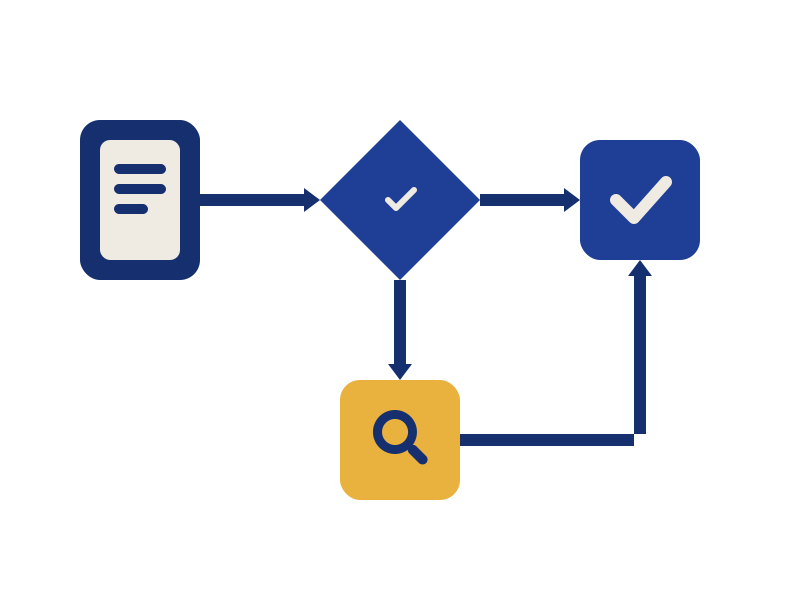
The problem
Most routine work follows rules, even when nobody has written them down.
Once they're written down, software applies them the same way every time. What's left over, like reading a scanned document or answering a customer in their own words, is where AI earns its place.
What you get
- IntegrationsThe tools you already pay for, passing data to each other instead of through someone's keyboard.
- Workflow automationApprovals, notifications, syncing and scheduled reports.
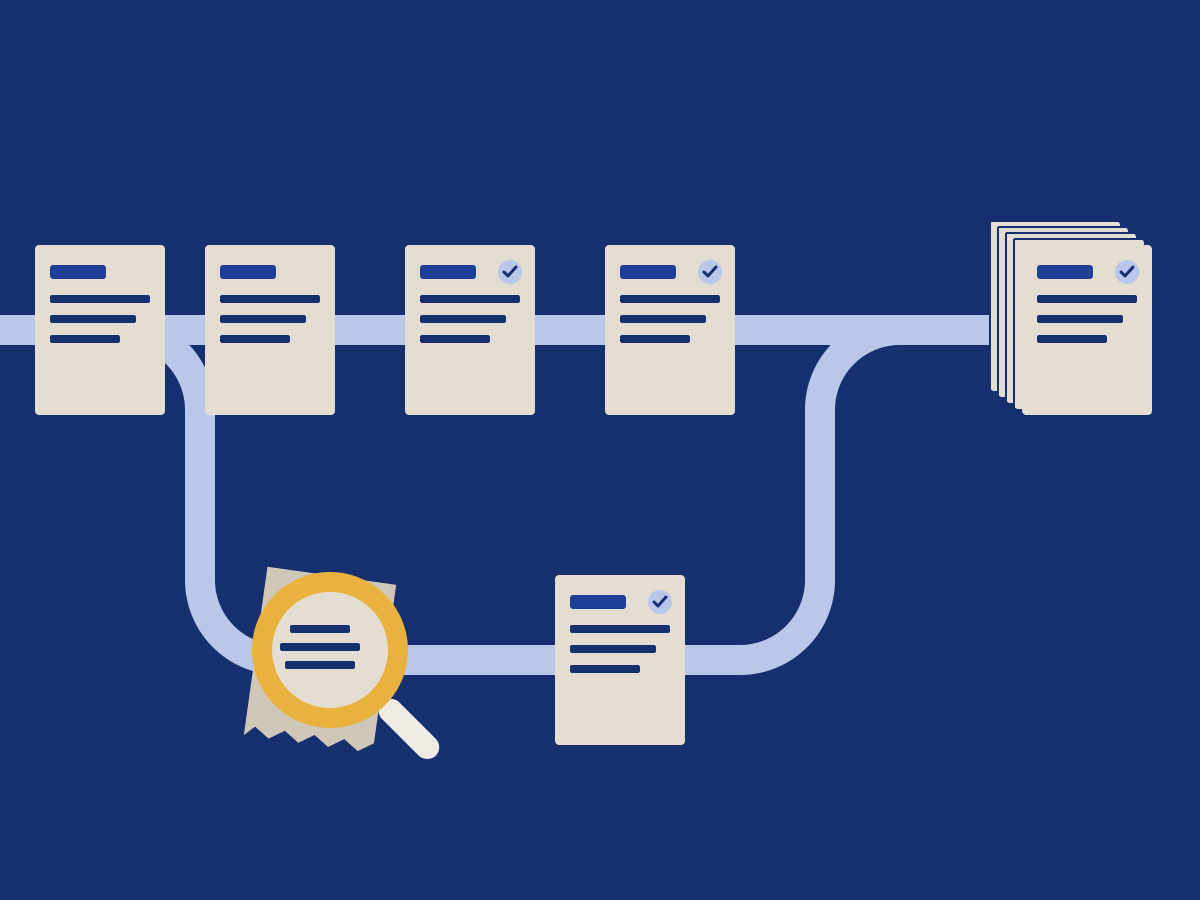
- Document and data extractionInvoices, forms and PDFs read into structured data, with checks.
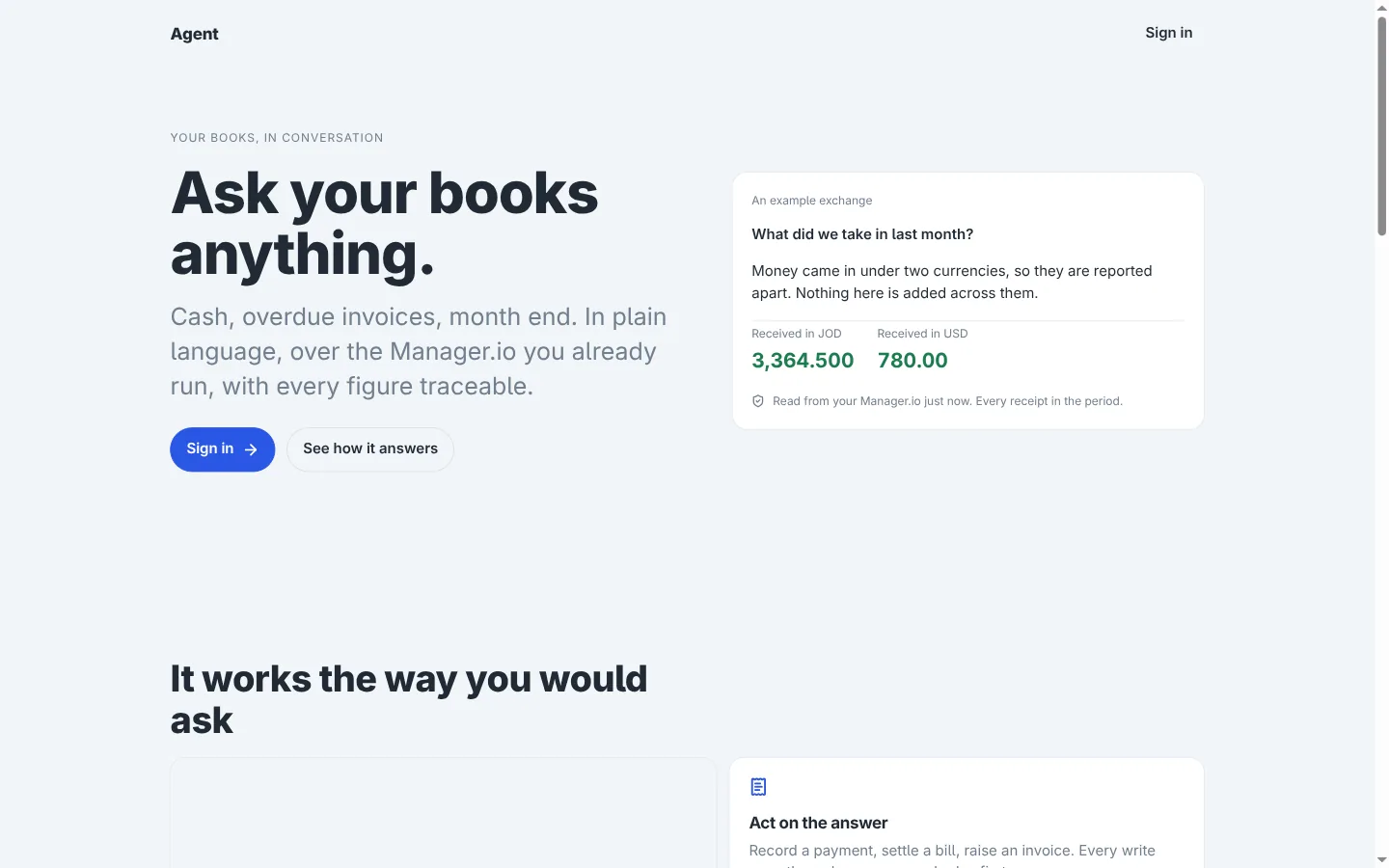
- AI agents on your dataAsk your own systems questions in plain language, with every answer traceable.
- Chat assistantsOn WhatsApp, Telegram or the web, handing over to a person when they should.
- Logged and reviewableEvery automated step is recorded, so a person can check what happened and why.
How we approach it
If a fixed rule can do it, a rule does it. It's cheaper, faster and the same every time.
AI handles only what rules can't, like reading a scanned invoice or understanding a customer's message, and its work is logged so a person can check it.
Rules first. AI where it earns its place.
Most business problems are mechanical: data typed twice, approvals chased on WhatsApp, the same report rebuilt every month. Those get plain, rule-based automation that does the same thing every time. AI comes in only for what rules can't handle.
- 1Fix the processFind where the time actually goes before building anything.
- 2Automate the routineRules, integrations and scheduled jobs. Predictable, cheap to run, easy to check.
- 3Add AI for the restDocuments, conversations and judgement calls, with every step logged and reviewable.
Related work
Other services
What's slowing your business down?
Tell us how it works today. We'll tell you what we'd change, and what we wouldn't build.